Marvel Rivals ranked reality check shows why hardstuck players stay stuck in Grandmaster
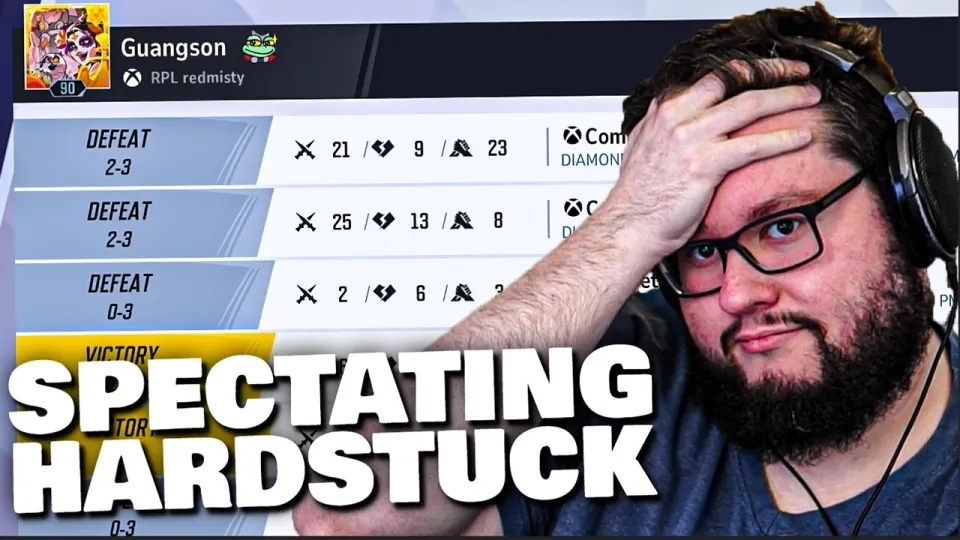
Video: I Spectated Someone Who Claimed To Be Hardstuck In Marvel Rivals
Need articles like this for your video? They help promote it on YouTube and Google — order them in the Telegram bot @sat_sit_bot. It writes articles around your video, embeds the video and publishes them on popular niche websites (no ads). Try it free: 50 articles on us.
· based on the channel Flats
Key takeaways
- Flats spectated a Marvel Rivals player who insisted his teammates were holding him back in Grandmaster.
- The player mained Spider-Man before switching to a support pick and playing Cloak and Dagger as a heal-bot.
- He walked past a health pack while looking for a health pack, and his invisibility cooldown was used with no plan.
- His win rate was negative while his rank kept climbing, which viewers blamed on Marvel Rivals' rank inflation.
- Flats' verdict: the problem was decision-making and accountability, not the matchmaking.
If you feel hardstuck in Marvel Rivals, the fastest way to find out why is to watch your own gameplay the way a coach does: the answer is almost never the teammates. In a Marvel Rivals spectate session, streamer Flats followed a player who swore his Grandmaster rank was being ruined by bad lobbies, and the footage showed the opposite — a support player with no plan for his cooldowns, no awareness of nearby health packs and no accountability for his own deaths. Flats streams these reviews live on his Twitch channel, where the VOD is the real teaching tool.
What the Marvel Rivals spectate actually revealed
The player opened by claiming he was hardstuck in Grandmaster and that his teams were the reason. Flats loaded into spectator mode with no argument to win, just a game to watch, and within minutes the pattern was clear. The player had climbed to Grandmaster as a Spider-Man main — a pick that rewards aggression and mechanical confidence — but in this match he was on Cloak and Dagger, standing far back and holding the dagger almost the entire time. Viewers summed it up neatly: he was playing Dagger and holding the Cloak, which means the aggressive half of the kit, the part that turns a support into a playmaker, was never used.
The bigger tell was positioning. At one point the player walked straight past a health pack while visibly searching for a health pack, a moment that needs no commentary to land. His invisibility cooldown, the escape tool that should bail him out of a dive, was spent with no threat nearby and then unavailable when he actually needed it. None of this is a mechanical failure. It is a decision-making failure, and decision-making is exactly what a ranked ladder punishes.
Why the negative win rate still climbed to Grandmaster
A negative win rate in Grandmaster is the detail that broke the chat's patience. In Marvel Rivals, ranked points are not a pure win-loss ledger: performance modifiers, protection from demotion and seasonal resets mean a player can lose more games than he wins and still drift upward. That is not a bug unique to one account — it is a structural feature of the ladder, and it produces exactly the kind of player Flats was reviewing: someone with Grandmaster mechanics on one hero, Grandmaster rank on the profile, and Gold-level habits on everything else.
The practical consequence for anyone grinding ranked is that rank is a lagging indicator. A Grandmaster badge tells you how much time an account has spent in the system, not how well the person behind it understands the game. If you want to know your real level, look at your win rate over the last 50 games and at how many of your deaths were avoidable, not at the icon next to your name.
The ego problem behind hardstuck claims
What made the session uncomfortable to watch was the confidence. The player narrated his own play as correct while his team lost fights he could have influenced, and every death had an external cause. That is the classic hardstuck mindset, and it is self-reinforcing: if the teammates are always the problem, there is never a reason to review your own cooldown usage, your ultimate timing or your hero choice.
Flats' approach in these reviews is deliberately dry. He does not shout; he lets the footage do the arguing, occasionally dropping a line about what the player should have done and then waiting for the game to prove him right. The humor comes from the gap between the player's self-assessment and the screen — a gap wide enough that one viewer called the whole thing a self-inflicted public humiliation. The takeaway is not that the player is uniquely bad. It is that the same blind spot shows up in thousands of accounts, and the only fix is to stop treating teammates as the variable you can control.
Typical questions from viewers about Marvel Rivals ranked
Spectate sessions like this one generate the same arguments every time, and they are worth answering directly.
- Is the matchmaking rigged against me? No system is perfect, but a player who loses more than he wins over dozens of games is the common factor in every one of those games. Matchmaking variance evens out; habits do not.
- Can one-tricking a hero carry you up the ladder? It can get you to a rank, as the Spider-Man main demonstrates, but it does not teach you the game. The moment you are forced onto another role, the missing fundamentals show.
- Is playing a support as a pure healer viable? Holding the dagger and healing is safe, but it caps your impact. Cloak and Dagger's value comes from switching forms to blind, pressure and escape, and a heal-bot build leaves half the kit on the bench.
- Do high-rank badges mean anything? They mean time invested. A Grandmaster who ignores health packs and wastes escape cooldowns is proof that the badge and the skill are two different measurements.
- What should a hardstuck player do first? Watch one replay from the enemy team's perspective, count your avoidable deaths, and pick a single habit to fix for the next ten games.
How to stop being the hardstuck player in your own games
Fixing this is a checklist, not a personality change. Record your games and review them without commentary. Count how many times you died with an escape cooldown available — if the number is high, your problem is timing, not aim. Track your ultimate usage: an ultimate that lands after the fight is already lost is worse than one held for the next fight. On support, log how often you switch forms or use your utility offensively; if the answer is almost never, you are playing half a hero. Finally, pick one hero per role and learn the two or three maps where that hero is strongest, instead of flexing into unfamiliar picks under pressure.
The player in this Marvel Rivals spectate had the mechanics to reach Grandmaster on Spider-Man. What he lacked was the habit of asking what he could have done differently — and that habit is free, available in every replay, and the only thing on the list that no teammate can take away from you.
Where to watch the full Marvel Rivals breakdown
The review was produced by Flats, a longtime Overwatch streamer who now covers Marvel Rivals ranked play with the same blunt, evidence-first style. His channel is built on spectating players who ask for help and then discovering, together with the audience, what the actual problem is. If you want more sessions like this one, follow the live stream at twitch.tv/flats — that is where the spectates happen first, and where you can submit your own gameplay for review. The lesson from this one is simple: the ladder is not holding you back, your cooldown usage is.
Source: I Spectated Someone Who Claimed To Be Hardstuck In Marvel Rivals · Markdown version
Questions & answers
Why does a Marvel Rivals player with a negative win rate reach Grandmaster?
Ranked points in Marvel Rivals are not a pure win-loss ledger. Performance modifiers, demotion protection and seasonal resets mean an account can drift upward even while losing more games than it wins. That is why a Grandmaster badge reflects time invested as much as skill, and why win rate over the last 50 games is a better measure of your real level.
Is Cloak and Dagger supposed to be played as a pure healer?
No. Holding the dagger and healing is the safe half of the kit, but Cloak and Dagger's real value comes from switching forms to apply pressure, blind enemies and escape dives. A player who stays on dagger for an entire match leaves most of the hero's utility unused and caps their own impact on the fight.
What does it mean to be hardstuck in Marvel Rivals?
Being hardstuck means your rank has stopped moving despite regular play. In most cases the cause is a repeated habit — wasted escape cooldowns, poor ultimate timing, ignoring health packs or refusing to switch heroes — rather than matchmaking. Reviewing replays and counting avoidable deaths is the fastest way to identify which habit is holding you back.
How do I get my gameplay reviewed by Flats?
Flats reviews Marvel Rivals and Overwatch gameplay live on his Twitch channel, where viewers submit matches for spectate sessions. The reviews focus on decision-making rather than mechanics, so the useful submissions are the ones where you genuinely do not understand why you are losing. Follow the stream to catch the sessions and learn from other players' mistakes.